School Crush: Capturing Youthful Charm in Your Designs
There’s a particular kind of energy that comes with schoolyard memories—the doodles in notebook margins, the handwritten notes passed between friends, the vibrant posters lining hallway walls. Capturing that spirited, youthful essence in professional design work can be a challenge, but the right typography can bridge that gap beautifully. This is where a thoughtfully crafted handwritten font enters the picture, offering a blend of nostalgia and contemporary appeal that resonates across generations.
The Visual Personality Behind the Typeface
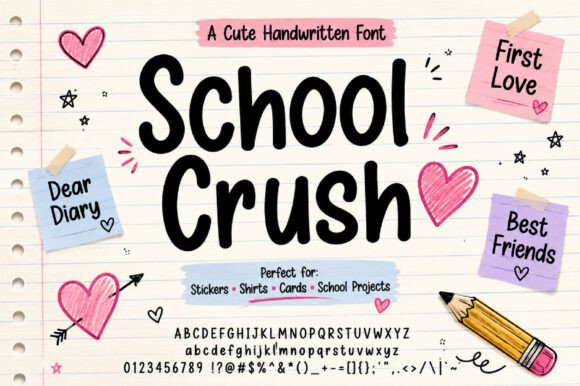
School Crush is a display font that draws its character from the informal, joyful spirit of childhood sketches. Its letterforms feature rounded edges and a balanced weight that feels approachable without sacrificing clarity. Unlike many script fonts that prioritize elegance or formality, this typeface leans into casual friendliness. The strokes have a natural, hand-drawn quality that avoids looking overly polished or sterile—exactly the kind of warmth that makes a design feel human and relatable.
What makes this particular creative font stand out is its versatility within the handwritten category. Some handwritten typefaces sacrifice readability for style, but School Crush maintains a clean structure that holds up well at various sizes. The letters are uncluttered, with enough spacing to breathe, which means they work just as well on a small sticker as they do on a large poster. For designers who need a premium font that balances personality with practicality, this kind of thoughtful construction matters significantly.
Where This Font Truly Shines
Think about the projects where a touch of playfulness would elevate the final result. Children’s book covers, classroom worksheets, birthday invitations, and educational posters all benefit from typography that feels welcoming rather than intimidating. School Crush fits naturally into these contexts, but its applications extend far beyond the obvious.
Consider packaging design for a small-bake bakery or a handmade soap brand. A handwritten font like this communicates artisanal quality and personal care—qualities that resonate with consumers seeking authentic products. Similarly, for social media graphics, this typeface can help a brand stand out in crowded feeds. A food blogger might use it for recipe titles, while a children’s clothing line could incorporate it into logo design to establish a friendly, approachable identity from the first glance.
Here are some practical applications worth exploring:
- Brand identity materials for businesses targeting families or younger audiences
- Editorial design for magazines, newsletters, or blog headers with a casual tone
- Web design elements like call-to-action buttons or section headings
- Digital products such as printable planners, worksheets, or e-book covers
- Marketing assets including flyers, email headers, and promotional banners
- Merchandise like t-shirts, tote bags, and mugs
Each of these applications benefits from the font’s ability to inject personality while maintaining a professional presentation. A modern typography choice like this doesn’t just decorate—it communicates tone and intention, helping audiences immediately understand what a brand or project is about.
Making Smart Typography Decisions
Choosing the right typeface for a project involves more than picking something that looks appealing in isolation. Context matters enormously. A font that works beautifully for a children’s party invitation might feel out of place on a corporate annual report. Before selecting any design asset, consider the emotional response you want to evoke and the audience you’re speaking to.
For projects that call for warmth, approachability, and a sense of fun, a handwritten font like School Crush is a strong candidate. However, pairing it thoughtfully with complementary typefaces can elevate the overall design. A clean sans serif font for body text, for instance, creates a nice contrast that keeps layouts readable while allowing the display font to do its job as a focal point. Experiment with different combinations during the design process—what looks good in theory doesn’t always work in practice, so testing font pairings in context is essential.
Readability should always remain a priority, even with decorative typefaces. While School Crush is designed with clarity in mind, it’s wise to avoid using it for long paragraphs of body copy. Instead, reserve it for headlines, subheadings, or short phrases where its personality can shine without overwhelming the reader. This approach respects both the font’s strengths and the audience’s need for comfortable reading experiences.
Practical Considerations for Commercial Use
For designers and business owners, licensing is a crucial factor when selecting fonts. A commercial font like School Crush typically comes with specific usage rights that allow for professional projects, merchandise, and client work. Always review the licensing terms before finalizing a purchase to ensure the font covers your intended applications. This is especially important for brand identity projects where the typeface will be used across multiple touchpoints over an extended period.
Another practical step is reviewing the full character set and any included styles. Some premium fonts offer multiple weights, alternates, or stylistic variations that provide additional flexibility. Understanding what’s available helps you make the most of the typeface and avoid limitations during the design process. If a font includes ligatures or special characters, these can add subtle refinements that make your work feel more polished and intentional.
Ultimately, the best font pairing and typography choices are those that serve the project’s goals while connecting with the intended audience. Whether you’re designing a classroom poster, launching a children’s product line, or creating social media graphics for a family-oriented brand, School Crush offers a distinctive voice that’s hard to replicate with more conventional typefaces. Its charm lies in its authenticity—a quality that resonates in a design landscape often dominated by sleek minimalism.
When you find a typeface that aligns with your creative vision and practical needs, it becomes more than just a design asset. It becomes a tool for storytelling, a way to infuse your work with personality and emotion. For projects that call for joy, creativity, and a touch of nostalgia, this spirited handwritten font might just be the perfect fit.