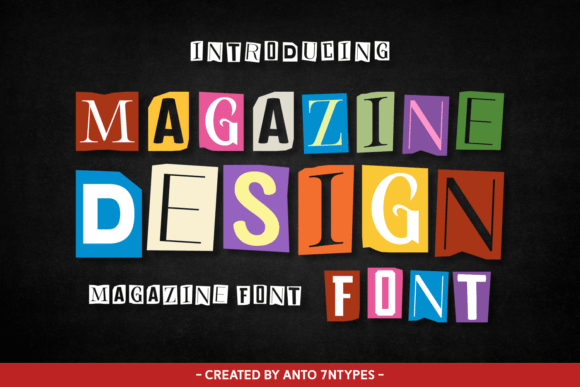
Magazine Design: The Vintage Ransom Note Font for Modern Brands
There's a specific energy to a classic ransom note—the jagged edges of hastily cut letters, the mismatched fonts, the urgent, handmade collage. It’s a style that screams personality. Now, imagine capturing that bold, nostalgic charisma and channeling it into a sophisticated design asset. That’s exactly what the Magazine Design font achieves. Named for its direct inspiration, this premium display typeface isn't about chaos; it's about curated, retro-handcrafted style. It’s the sound of a vintage press, the look of a beloved newspaper clipping, and the joyful text collage you made as a kid, all polished into a robust and versatile creative font for today’s projects.
A Typeface with a Story to Tell
At its heart, Magazine Design is a character actor. It doesn’t do subtle, wallflower work. Instead, it steps into the spotlight with the confident, slightly worn charisma of a mid-century advertisement. Each letterform feels individually crafted, echoing the era of manual typesetting and paste-up. This isn't a sterile digital product; it has texture and weight. The slight irregularities and bold strokes are what give it authenticity, making it a standout serif font that feels both cheerfully obsolete and strikingly fresh. It’s this duality that makes it so powerful for branding—it’s instantly recognizable and packed with emotion.
Think about the brands that stick with you. Often, it’s not just the logo, but the overall feeling. Magazine Design injects that feeling of heritage, playfulness, and hands-on craftsmanship. For a small business, using this typeface is like wearing a signature piece of clothing; it tells customers you value personality and aren’t afraid to stand out from the sea of minimalist sans serif fonts.
From Packaging to Pixels: Practical Applications
Where does a font with this much charisma actually work? The answer is surprisingly broad. Its strength as a display font means it’s built for headlines, logos, and any text that needs to grab attention from a distance. Let’s break down some real-world uses.
Brand Identity & Logo Design: If your brand has a vintage, artisan, retro, or playful angle, this typeface is a goldmine. It’s perfect for creating a logo that feels established and trustworthy, yet fun. Imagine it on the masthead of a boutique magazine, the logo for a craft brewery, or the brand name for a handmade soap company. It instantly communicates a specific aesthetic without a single line of explanatory text.
Packaging & Merchandise: On a shelf crowded with products, Magazine Design makes packaging pop. It’s ideal for product names, flavor labels, or tagline boxes on food jars, coffee bags, or cosmetic boxes. The same principle applies to merchandise—T-shirts, tote bags, and mugs emblazoned with a witty quote in this font become instant conversation starters. It turns everyday items into wearable or usable art.
Editorial & Print Layouts: This is where the font’s namesake shines. Use it for magazine headlines, chapter titles in books, or pull quotes in brochures. It adds visual rhythm and a focal point to a page layout. Paired with a clean, readable body font, it creates a beautiful contrast that guides the reader’s eye and makes the content more engaging.
Digital Presence: Don’t relegate this style to print alone. It’s a powerhouse for social media graphics. Think Instagram story headers, YouTube thumbnails, or Pinterest pins. Its boldness cuts through the noise of a busy feed. On a website, use it for hero section headlines or key calls-to-action. It adds a layer of personality that can transform a standard blog into a memorable brand experience.
Making It Work: Pairing and Practicality
A font this distinctive requires a thoughtful approach. Using it for body text would be a mistake—its charm would become a distraction, hurting readability. The key is to use it strategically as the star of the show, supported by a more neutral cast.
The Art of Font Pairing: Magazine Design pairs beautifully with simple, clean typefaces. A geometric sans serif (like Montserrat or Futura) or a humanist sans serif (like Open Sans) for body text creates a harmonious balance. The contrast allows the display font to command attention without overwhelming the viewer. For a more classic feel, a simple, sturdy serif can also work well for subheadings. Always test your pairings in context—see how they look together on a mockup of your actual project.
Readability is Key: Remember, the goal is to be understood. Use this font at larger sizes where its unique details are clear. Avoid setting long sentences or paragraphs in it. For digital use, ensure there’s sufficient contrast between the text color and the background, and consider the viewing environment—a bold font can become heavy if not used with care.
Licensing and Files: Before purchasing any commercial font, understand the license. Does it cover the number of users or computers you need? Does it include the specific uses you have in mind (like for merchandise or digital products)? A reputable premium font will come with clear licensing terms and often include multiple file formats (OTF, TTF, WOFF) for different software and web use. Review the full character set and any included styles (like bold or italic versions) to ensure it has everything you need for your project’s visual consistency.
More Than Just a Font: A Design Catalyst
Ultimately, Magazine Design is more than a collection of letters. It’s a design asset that can define a brand’s voice, evoke a specific time period, and create immediate emotional connections. It’s a tool for the creative entrepreneur who wants their packaging to tell a story, the blogger who wants their quotes to be shared, and the marketer who wants an ad to stop the scroll.
In a world saturated with clean, corporate typography, choosing a font with this much personality is a bold statement. It says you appreciate the craft, you understand visual storytelling, and you’re not afraid to inject a bit of joy and nostalgia into your work. Whether you’re designing a book cover, a set of social media templates, or a full brand identity, this typeface offers a unique and powerful way to make your message not just seen, but felt. It’s a testament to how the right font doesn’t just display words—it transforms them.