Athabasca: The Modern Sans-Serif That Adapts to Your Vision
Every designer, entrepreneur, or creative knows the frustration: you have a brilliant concept, a clear message, and a solid plan, but something feels off. The visual identity lacks cohesion. The text on your packaging doesn't match the energy of your website. Your social media graphics feel disjointed from your print materials. Often, the missing piece isn't a bigger budget or a more complex design—it's a typeface that can carry the weight of your entire brand system with consistency and style. This is where a versatile workhorse font becomes invaluable, and few fit that description as well as Athabasca.
A Typeface Built for Flexibility and Clarity
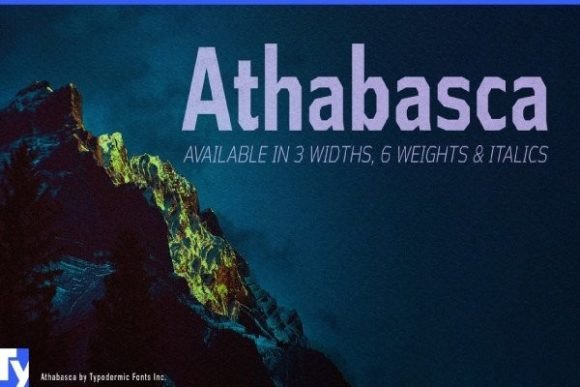
Athabasca is a premium font that defies the stereotype of the boring utility sans-serif. It's an angular, geometric sans serif font family with a distinct personality that balances modern sharpness with approachable neutrality. What makes it stand out in a crowded market of typefaces is its incredible range. We're not talking about a single style with a few weights. Athabasca offers 6 weights, from a delicate Thin to a robust Black, across 3 widths—Regular, Condensed, and Extended. Each of these styles comes with a true italic version, not just a slanted roman. This extensive library means you can use one typeface family to create a complete visual hierarchy for a brand identity, a multi-page editorial layout, or a complex packaging design without ever needing to introduce a second, clashing font.
The angular details give Athabasca a contemporary, slightly technical edge without feeling cold. It reads beautifully at small sizes in body copy for blogs or digital products, yet it commands attention when used bold and large for headlines on posters or website hero sections. This duality is its superpower. It’s a creative font that doesn’t scream for attention but subtly elevates every project it touches, making designs feel considered and professional.
Practical Applications Across Your Creative Workflow
Let's move beyond theory and talk about where Athabasca truly shines in real-world scenarios. Its versatility isn't just a marketing claim; it's a practical tool for solving common design challenges.
- Brand Identity & Logo Design: Building a brand requires a typeface that can grow with you. Athabasca’s weight and width variations allow you to craft a logo that is unique and memorable, then use the same font family for all supporting text. This creates instant visual consistency across business cards, letterheads, and your website, which is fundamental for brand recognition. It pairs exceptionally well with a elegant serif font for a classic contrast or with a playful script font for a more dynamic feel.
- Packaging Design: On a crowded shelf, clarity and personality are key. Use the Extended width for bold product names that stand out, the Condensed style for dense nutritional information or descriptions that need to fit in tight spaces, and a lighter weight for elegant, minimalist designs. The font's clean lines ensure all text is highly readable, which is a critical consideration for packaging where customers make quick decisions.
- Digital Presence & Marketing Assets: For websites and blogs, readability is non-negotiable. Athabasca’s Regular weight in its standard width is optimized for screen legibility, making it an excellent choice for body text. For social media graphics, you can create a dynamic hierarchy by using the Bold or Black weights for call-to-action headlines and pairing them with the Light weight for supporting information. This helps guide the viewer's eye and improves engagement. It’s equally effective for email headers, webinar slides, and digital ad creatives.
- Print Materials & Editorial Layouts: From annual reports and magazines to event invitations and posters, Athabasca provides the tools for sophisticated editorial design. You can use the different widths to create interesting text blocks and visual rhythm on a page. The italics offer a refined way to emphasize quotes or subheads. Because the family is so comprehensive, a publication can have a cohesive typographic system that feels both professional and visually interesting throughout.
Making Strategic Typographic Choices
Having a powerful font like Athabasca is the first step. Using it effectively is the next. Here’s some practical advice for integrating it into your projects.
Start with Your Project's Goal. Are you aiming for cutting-edge tech sophistication? The angular forms of Athabasca in its Regular or Condensed width might be perfect. Want something more stable and trustworthy for a financial service? The Medium or Semibold weight in the standard width conveys reliability. Define the emotion or message first, then explore the font's styles to find the match.
Test, Test, and Test Again. Never choose a font based solely on how the alphabet looks in a specimen sheet. Set your actual headline and body copy. See how the letters interact. Check the kerning (spacing between letters) in your specific words. View it at the size it will be used—on a mobile screen, on a printed brochure, on a billboard mockup. Athabasca is designed for performance, but your own testing ensures it performs perfectly for your unique content.
Master Font Pairing. While Athabasca can carry an entire project on its own, pairing it with other fonts can create exciting contrast. A classic strategy is to pair a sans serif like Athabasca with a serif font for body text, such as a readable serif font like Lora or Merriweather. This combination leverages the strengths of both typeface categories. For a more contemporary feel, pairing it with a clean, geometric sans serif in a different weight can work, but be cautious of fonts that are too similar, which can look like a mistake. Always ensure there is enough contrast in structure, weight, or style.
Consider the Full Family. Before starting, take a moment to review all the included styles in the Athabasca font package. Knowing you have access to Thin, Light, Regular, Medium, Semibold, and Black in three widths gives you a vast toolkit. Planning your typographic hierarchy in advance—which style for H1s, H2s, pull quotes, captions, and body text—will save you time and result in a more polished final product.
Don't Forget the License. Athabasca is a commercial font created by Typodermic Fonts. This means for any professional, commercial, or client work—from a logo for a small business to merchandise you sell—you need to ensure you have the appropriate license. Using fonts legally is a crucial part of professional practice and supports the type designers who create these essential tools. Always check the license details to understand what's permitted for your specific use case.
Elevating Your Visual Communication
In the end, typography is about communication. A well-chosen typeface like Athabasca does more than just display words; it conveys tone, establishes credibility, and creates a seamless experience for your audience. Its modern typography foundation, combined with its extraordinary flexibility, makes it a valuable design asset for anyone serious about their visual presentation. Whether you're a solo entrepreneur crafting your first brand identity, a marketer developing a campaign, or a designer working on a complex publication, having a reliable and versatile sans-serif font in your toolkit is essential. Athabasca offers that reliability while providing enough character to help your creative ideas truly come alive, ensuring your message is not just seen, but felt and remembered.